UK Radiographer's Guide to Australia: Complete 2026 MRPBA Pathway
The complete 2026 guide for UK HCPC-registered radiographers moving to Australia — the easiest pathway of any international source country. English exemption (UK is on AHPRA recognised countries list), ASMIRT skills assessment, National MRP Exam, fees in £ and AUD, NHS England 2026/27 pay band comparison, visa subclasses, realistic timeline. Covers Diagnostic Radiographer and Radiation Therapist divisions only — Nuclear Medicine Technologists follow a separate ANZSNM pathway.
The GdayRadiographer Team
14 April 2026
17 min read
Ready to start your UK radiographer pathway?
See the step-by-step registration overview, costs, and free practice questions.

The British Radiographer's Complete Guide to Practising in Australia (2026)
Quick answer: UK-trained radiographers have the easiest pathway of any international source country to practise as radiographers in Australia. The UK's status on AHPRA's recognised countries list means UK candidates are exempt from formal English language testing — saving 6–12 weeks and AUD $400–600. UK candidates still complete the standard pathway: ASMIRT skills assessment (~AUD $1,041 offshore), AHPRA/MRPBA application, the National MRP Exam, and AHPRA registration. Total realistic budget: AUD $8,000–15,000 (~£4,200–7,900), and the typical timeline is 9–14 months from decision to first Australian paycheck — about 3–6 months faster than candidates from non-English-speaking countries.
This guide is for UK HCPC-registered Diagnostic Radiographers and Therapeutic Radiographers trained at UK universities. Note: if you trained as a Nuclear Medicine Technologist or a Sonographer, your pathway is different — see the disclaimer below.
Why the UK→Australia radiographer pathway is the easiest
UK-trained radiographers are the most welcomed international cohort in the Australian medical radiation workforce. The UK→Australia migration corridor for healthcare professionals is one of the oldest and best-established in the world, going back decades. NHS-trained Diagnostic and Therapeutic Radiographers have a strong reputation in Australian hospitals, and many senior Australian clinical educators, department heads and specialist radiographers are themselves UK-trained.
Three structural advantages make the UK pathway materially easier than for candidates from any other country:
- English language exemption. The UK is on AHPRA's "recognised countries" list (alongside Australia, Canada, New Zealand, Republic of Ireland and the United States — note South Africa was removed effective 18 March 2026). UK-qualified radiographers are exempt from formal English language testing for both ASMIRT and AHPRA. The official ASMIRT OQAP application form confirms: passport holders from the UK provide a certified passport copy in lieu of IELTS/OET/PTE/TOEFL/CAE results. This saves 6–12 weeks of preparation, AUD $400–600 in test fees, and the stress of meeting the IELTS 7-across-all-bands requirement that catches out candidates from most other countries.
- Hague Apostille membership. The UK is a Hague Apostille Convention member, so document authentication is a single-step apostille issued by the FCDO Legalisation Office. Much faster and cheaper than the consular legalisation required for non-Hague countries (Egypt, Iran, China).
- Strong qualification recognition. UK BSc (Hons) Diagnostic Radiography programs are HCPC-approved, internationally well-regarded, and ASMIRT assessors are familiar with the curriculum structure. While UK is not on ASMIRT's pre-approved list (only New Zealand is), individual UK applications are generally processed efficiently with positive outcomes when properly documented.
The trade-off: salary uplift is modest by international standards. Australian radiographer salaries are roughly equivalent to UK NHS Band 5 at entry level and slightly higher at Band 6/7. The UK→Australia move is rarely about money — it's about lifestyle, climate, work-life balance, professional opportunity, and quality-of-life factors. We'll address that in the salary section.
Can UK radiographers work as radiographers in Australia?
Yes — but you still need to formally register with the Australian regulator. UK Diagnostic and Therapeutic Radiographers train through 3-year BSc (Hons) Diagnostic Radiography or BSc (Hons) Radiotherapy programs at HCPC-approved universities. The structure is typically 50% academic and 50% clinical placement across the three years. Top programs are offered by:
- City St George's, University of London
- University of Leeds
- Cardiff University
- University of Salford
- Sheffield Hallam University
- University of Cumbria
- University of Hertfordshire
- London South Bank University
- University of Huddersfield
- University of Bradford
- Glasgow Caledonian University
- Robert Gordon University Aberdeen
- Ulster University
- University of Plymouth
- University of the West of England (UWE Bristol)
- University of Suffolk
- University of Brighton
The profession is regulated by the Health and Care Professions Council (HCPC), which holds the protected title "Radiographer" in the UK. The professional body is the Society and College of Radiographers (SCoR), the long-standing UK trade union and professional society.
However, the Australian regulator (the Medical Radiation Practice Board of Australia (MRPBA) under AHPRA) does not auto-recognise UK radiography qualifications for direct registration. Only New Zealand is currently on ASMIRT's pre-approved list. UK-trained Diagnostic and Therapeutic Radiographers must complete the ASMIRT skills assessment, the AHPRA registration process, and the National MRP Exam before they can practise in Australia.
The good news is that for UK candidates, this process is significantly streamlined compared to candidates from non-English-speaking countries — and Australian regional and metropolitan hospitals actively recruit UK-trained radiographers via subclass 482 employer sponsorship.
Important — different pathway for Nuclear Medicine Technologists and Sonographers. If your nominated occupation is Nuclear Medicine Technologist (ANZSCO 251213), your skills assessment is done by the Australian and New Zealand Society of Nuclear Medicine (ANZSNM) — NOT ASMIRT — and the order is reversed (you must obtain MRPBA registration first, then apply to ANZSNM for migration skills assessment). If you trained as a Sonographer (ANZSCO 251214), ASMIRT does conduct your migration skills assessment but uses a separate "Certificate of Recognition in Ultrasound" outcome, and your clinical accreditation goes through ASAR rather than MRPBA. Both pathways are different from the one in this guide.
This guide focuses on the Diagnostic Radiographer (ANZSCO 251211) and Radiation Therapist (ANZSCO 251212) pathway via ASMIRT and MRPBA — the route that applies to the majority of UK BSc (Hons) Diagnostic Radiography and BSc Radiotherapy graduates.
ASMIRT and MRPBA fees for UK radiographers in 2026 (£ and AUD)
All fees below are from the official ASMIRT Schedule (asmirt.org/overseas-assessments) and the MRPBA fees page, converted at 1 AUD ≈ £0.527 (April 2026).
| Stage | AUD | Approximate GBP |
|---|---|---|
| ASMIRT Skills Assessment (offshore applicants) | $1,041 | ~£549 |
| ASMIRT Skills Assessment (onshore, incl. GST) | $1,143 | ~£602 |
| Dual-modality assessment (extra) | +$500 | +~£264 |
| AHPRA application fee | ~$300 | ~£158 |
| National MRP Exam | ~$800–1,200 | ~£422–632 |
| MRPBA annual registration (2025/26) | $221 | ~£117 |
| Subtotal (regulator fees) | ~$2,362–2,762 | ~£1,245–1,456 |
Additional costs to budget for:
- English language test: NOT REQUIRED (UK is on AHPRA's recognised countries list — major saving vs other source countries)
- Document legalisation: ~£35–55 (single-step FCDO apostille — much cheaper than non-Hague countries)
- Visa application (subclass 189 or 190): ~AUD $4,640 / ~£2,445 in 2026 — verify at Home Affairs
- Travel and accommodation if you sit the National MRP Exam in Australia (most candidates do — the exam is delivered at approved centres in Sydney, Melbourne, Brisbane, Perth, Adelaide): AUD $2,500–4,500 / £1,320–2,370 (single round trip from London)
- Exam preparation resources: AUD $300–1,500 / £158–790
Realistic total budget: £4,200 to £7,900 (AUD $8,000–15,000) from start to first Australian paycheck — substantially cheaper than for any non-English source country, primarily because you skip the English test entirely.
Australian radiographer salaries vs NHS England Agenda for Change pay bands (2026/27, effective 1 April 2026):
| Career stage | NHS England 2026/27 | Australia (AUD) | Australia (GBP equivalent) |
|---|---|---|---|
| Newly qualified (Band 5 / 1–3 yrs) | £32,073–39,043 | $67,590–70,408 | ~£35,610–37,100 |
| Experienced (Band 6 / 4–9 yrs) | £37,338–44,962 | $91,000–95,000 | ~£47,950–50,065 |
| Advanced (Band 7 / 10+ yrs) | £49,388–56,515 | $115,000–121,000 | ~£60,605–63,767 |
| Senior/specialist (Band 8a) | £58,000+ | $130,000–160,000+ | ~£68,510–84,320+ |
Note: NHS Scotland and Wales pay bands are slightly higher than England — Scotland received a 4.25% rise vs England's 3.6% in 2025/26, then 3.3% in 2026/27. Northern Ireland follows England rates. The figures above use NHS England 2026/27 rates which apply to the majority of UK radiographers; if you work in Scotland your figures will be slightly higher.
The honest salary picture: at entry level, Australian radiographer salaries are slightly higher than NHS England Band 5 in nominal terms, but Sydney and Melbourne housing costs offset much of the difference. The financial uplift becomes more meaningful at mid-career (Band 6/7 equivalent), where Australian salaries pull ahead by 15–25%, and most meaningful at senior/specialist levels.
The real motivation for UK→Australia radiographer migration is rarely just money. It's a combination of:
- Lifestyle and climate — outdoor lifestyle, beaches, sunshine
- Work-life balance — Australian healthcare typically operates with better staffing ratios than the NHS in 2026
- Modern equipment — Australian public and private hospitals have generally good capital expenditure on imaging equipment
- Career flexibility — easier movement between public and private sectors than the NHS
- Family migration — partner visas, schooling, multi-generational migration
- Long-term residency / citizenship — pathway to PR and Australian citizenship is well-established for UK passport holders
If you're moving primarily for the salary alone, the financial case is real but not dramatic. If you're moving for lifestyle, climate, and quality of life, it's one of the strongest healthcare migration corridors in the world.
The pathway explained step by step
Step 1 — Document gathering and ASMIRT Skills Assessment (~AUD $1,041 / £549)
You submit a comprehensive application to ASMIRT including:
- BSc (Hons) Diagnostic Radiography or BSc (Hons) Radiotherapy degree certificate and all year-by-year transcripts
- Detailed module/curriculum information from your university (most UK universities provide this on request)
- Clinical placement records showing modalities, hours and procedures performed during placements
- HCPC registration certificate and current entry on the HCPC register
- SCoR membership letter (if a member — not mandatory but useful supporting documentation)
- Professional references from current/previous NHS or private sector employers (letters must state date range, hours per week, full range of modalities performed, and time spent in each modality)
- Proof of at least 1 year (12 months FTE) of post-qualification clinical experience within the last 5 years (mandatory, per the ASMIRT OQAP application form, July 2025)
- Identity documents
- Certified copy of UK passport (in lieu of English test results)
ASMIRT compares your qualifications against the Australian "Statement of Qualification" standard at the time of your graduation. UK BSc (Hons) Diagnostic Radiography programs are generally well-regarded by ASMIRT — most UK candidates receive positive assessments without requiring additional documentation, provided clinical placement experience is well-documented.
Processing time: typically 8–16 weeks as per ASMIRT's official guidance. UK applications tend toward the faster end of that range because documentation is in English, HCPC registration is straightforward to verify, and curricula are well-known to ASMIRT assessors.
Important: a positive ASMIRT skills assessment does not guarantee AHPRA registration. You still need to pass the National MRP Exam.
Step 2 — AHPRA application via MRPBA (~AUD $300 / £158)
Once ASMIRT issues your Skills Assessment, you apply to MRPBA via AHPRA for registration. MRPBA reviews your application and confirms which division you are eligible for: Diagnostic Radiographer or Radiation Therapist.
Step 3 — National MRP Exam (~AUD $800–1,200 / £422–632)
The National MRP Exam is an online computer-based exam delivered at approved exam centres in Australia (predominantly Sydney, Melbourne, Brisbane, Perth, Adelaide). It has two parts:
- Part A — Common Capabilities: tests the foundations of medical radiation practice (radiation safety, professional practice, communication, ethics, infection control, Australian healthcare context, cultural safety)
- Part B — Division-Specific Capabilities: tests the technical and clinical knowledge for your chosen division (diagnostic radiography or radiation therapy)
You need a minimum of 65% in BOTH Part A and Part B to pass. The exam is held four times a year in 2026:
| Sitting | Exam dates | Registration window |
|---|---|---|
| Sitting 1 | 17–25 January 2026 | 29 December 2025 – 9 January 2026 |
| Sitting 2 | 11–19 April 2026 | 16–27 March 2026 |
| Sitting 3 | 11–19 July 2026 | 22 June – 3 July 2026 |
| Sitting 4 | 17–25 October 2026 | 21 September – 2 October 2026 |
You are permitted a maximum of three attempts.
For UK candidates: the technical content in Part B is generally familiar territory (UK BSc programs cover similar modalities, anatomy, pathology and radiation physics). The area UK candidates need to study deliberately is Part A's Australian-specific content — particularly Aboriginal and Torres Strait Islander cultural safety, the MRPBA Professional Capabilities (revised 2025), and Medicare billing fundamentals. These don't appear in UK NHS practice and are unfamiliar to most UK-trained radiographers.
Step 4 — AHPRA registration (~AUD $221 annual / £117)
Once you pass the National MRP Exam, you complete your AHPRA registration. The annual registration fee is AUD $221 for 2025/26, set by MRPBA and updated each September.
English language requirements for UK radiographers
This is the biggest single advantage UK radiographers have over candidates from any other country: you are exempt from formal English language testing.
The UK is on AHPRA's "recognised countries" list alongside Australia, Canada, New Zealand, Republic of Ireland and the United States (South Africa was removed effective 18 March 2026). This means that as a UK national whose qualification was obtained in the UK, you do not need to sit IELTS, OET, PTE Academic, TOEFL iBT or Cambridge English Advanced for either the ASMIRT skills assessment or AHPRA registration.
The official ASMIRT OQAP application form (July 2025 version) explicitly states that passport holders from the UK, Canada, New Zealand, USA or Republic of Ireland provide a certified copy of their passport in lieu of formal English test results. You will need to provide evidence of your nationality and proof that your qualification was obtained in the UK (HCPC certificate, university transcripts, certified passport copy).
Practical impact: this saves you 6–12 weeks of test preparation, AUD $400–600 in test fees, and the considerable stress of meeting ASMIRT's IELTS-7-across-all-bands threshold that catches out candidates from most other source countries. It is the single most significant time-saver in the UK pathway.
Note on Northern Ireland: candidates trained at Ulster University or other Northern Ireland HCPC-approved programs are also covered under the UK exemption.
Note on Republic of Ireland: if you trained in the Republic of Ireland (Trinity College Dublin, University College Dublin, etc.), you are also exempt because Ireland is on the recognised countries list — but technically you'd be following the Irish radiographer pathway, not the UK pathway. The mechanics are identical.
Visa pathways from the UK to Australia for radiographers
Diagnostic Radiographers (ANZSCO 251211) and Radiation Therapists (ANZSCO 251212) — Skill Level 1 — appear on Australia's key skilled occupation lists: the MLTSSL and the CSOL. Radiographers are flagged as a national shortage occupation by Jobs and Skills Australia. UK radiographers are eligible for multiple subclasses:
- Subclass 189 — Skilled Independent: Permanent residency, no sponsor needed. 65 points minimum EOI threshold; healthcare occupations sit in Tier 1 of the 4-tier invitation system, with invitations typically issued from 75–80 points onwards.
- Subclass 190 — State Nominated: Permanent residency with state sponsorship. Most Australian states sponsor UK-trained radiographers due to regional shortages. Adds 5 points to your EOI.
- Subclass 491 — Skilled Work Regional: 5-year provisional visa leading to PR. Lower points threshold but requires regional living.
- Subclass 482 — Skills in Demand (SID): Employer-sponsored temporary visa (2–4 years). This is the most common entry route for UK radiographers because Australian regional hospitals actively sponsor experienced UK-trained radiographers via the Core Skills stream. Many UK radiographers move through Skills in Demand first, then transition to subclass 186 PR via the Direct Entry stream.
- Subclass 186 — Employer Nominated Scheme: Permanent, employer-sponsored via the Direct Entry stream.
- Subclass 462 — Work and Holiday visa (UK passport holders aged 18–35 under the Australia-UK FTA): NOT a pathway to working as a registered radiographer (you can't practise without AHPRA registration), but some UK radiographers use this to visit Australia, complete the National MRP Exam in person, and arrange employer sponsorship while in country.
UK applicants benefit from:
- Document authentication via single-step FCDO apostille (Hague Convention member)
- DBS Enhanced Disclosure as the standard police clearance (recognised by Australian visa processing)
- Established UK→AU healthcare migration corridor with experienced visa lawyers, agents and clinical recruiters
For the most current visa information, always check the Department of Home Affairs website.
Realistic timeline from UK BSc (Hons) to registered Australian radiographer
| Month | Milestone |
|---|---|
| 0 | Decision to pursue Australian registration |
| 1 | Gather documents (BSc transcripts, syllabus, HCPC certificate, employer references, FCDO apostille) — single-step process |
| 2 | Submit ASMIRT Skills Assessment application |
| 2–4 | ASMIRT review and Statement of Qualification (8–16 weeks; UK applications tend toward the faster end) |
| 4–5 | AHPRA application via MRPBA |
| 5–8 | National MRP Exam preparation (200–400 study hours, focused on Australian-specific Part A content) |
| 8 | Sit National MRP Exam (next available sitting — Jan, Apr, Jul or Oct) |
| 8–9 | Exam results released |
| 9–10 | Complete AHPRA general registration |
| 10–12 | Visa application, DBS clearance, medicals (UK applicants typically process faster than candidates from countries with more complex security checks) |
| 12–14 | Arrive in Australia, begin working |
Typical fast-track total: 9–14 months from decision to first Australian paycheck. Candidates who already have UK→Australia employer sponsorship lined up can compress this further to 8–10 months by overlapping the visa application with the National MRP Exam preparation.
This is the shortest pathway to Australian radiographer registration of any international source country, primarily because UK candidates skip the English test (~3 months saved) and benefit from faster ASMIRT processing and document authentication.
Common mistakes UK radiographer candidates make — and how to avoid them
- Underestimating the National MRP Exam Part A. UK candidates often expect the exam to be similar to UK qualifying exams. The technical content (Part B) is familiar, but Part A's Australian-specific content — Aboriginal and Torres Strait Islander cultural safety, Australian radiation safety legislation, MRPBA Professional Capabilities, Medicare billing fundamentals — is unfamiliar territory. Don't skim Part A — it's where most UK candidates lose marks.
- Not arranging employer sponsorship before flying out. Many UK radiographers can secure subclass 482 employer sponsorship from within the UK before moving. This significantly reduces financial risk and accelerates the start date. Australian healthcare recruiters with UK presence (HCR International, JPS Medical, etc.) actively place UK radiographers in Australian hospitals.
- Confusing pathways for different divisions. If you're a Nuclear Medicine Technologist, the ASMIRT pathway in this guide does not apply — you need to apply to ANZSNM. Sonographers also use a separate pathway. Diagnostic and Therapeutic Radiographers from BSc (Hons) Radiography or Radiotherapy programs are the focus of this guide.
- Forgetting to verify HCPC registration is current. Your HCPC registration must be current and in good standing for ASMIRT to verify your professional status. Renew your HCPC fee before submitting your ASMIRT application.
- Underestimating the cost of living difference. Australian radiographer salaries are higher in nominal AUD terms but housing in Sydney, Melbourne and Brisbane is significantly more expensive than in much of the UK (excluding London). Budget for a 6-month settlement period before financial steady-state.
- Not considering regional Australia. The biggest salary uplift for UK radiographers is often in regional and rural Australia, where employer sponsorship, relocation packages, and salary loading are most generous. Sydney-Melbourne-Brisbane is competitive; Tasmania, Northern Territory, regional Queensland and regional Western Australia actively recruit UK-trained radiographers with very attractive packages.
Your next step
If you're a UK-trained radiographer planning to move to Australia, you have the easiest pathway of any international source country. The English exemption alone saves 3 months of preparation and the financial overhead of testing. Your real work is the National MRP Exam — particularly the Australian-specific Part A content.
Start your National MRP Exam preparation with GdayRadiographer — built specifically for internationally qualified radiographers, with structured coverage of the Australian healthcare context, cultural safety, and MRPBA Professional Capabilities that UK candidates most need.
You may also want to read:
- MRPBA Registration Pathway 2026: Step-by-Step for Overseas Radiographers
- National MRP Exam 2026: Complete Preparation Guide
- MRP Exam 12-Week Study Plan
- MRP Exam Day Walkthrough
- 5 MRP Exam Mistakes to Avoid
- Hardest MRP Exam Topics
- MRP Exam Fees 2026 Breakdown
- Streamlined IQHP Pathway 2026
This guide is based on official ASMIRT, MRPBA and AHPRA documentation, the ASMIRT Overseas Assessments policy (July 2025 OQAP application form), MRPBA fees and registration standards, the AHPRA English Language Skills Registration Standard (revised 18 March 2025), the MRPBA Professional Capabilities (revised 2025), HCPC Standards of Proficiency for Radiographers, NHS Agenda for Change pay bands 2026/27 (effective 1 April 2026), and the Australian Department of Home Affairs Skilled Occupation List. Fees and requirements change — always verify current information with ASMIRT, MRPBA, AHPRA, HCPC, and Home Affairs before making financial or migration decisions. GdayRadiographer is not affiliated with ASMIRT, MRPBA, AHPRA, HCPC or SCoR.
Frequently Asked Questions
Is a UK BSc (Hons) Diagnostic Radiography enough to register as a radiographer in Australia?
No, but it's the easiest pathway. UK qualifications are not auto-recognised, but UK candidates benefit from English test exemption and faster ASMIRT processing. You still need ASMIRT skills assessment, AHPRA application, National MRP Exam, and AHPRA registration.
How much does the radiographer pathway cost for UK candidates in 2026?
Regulator fees total approximately AUD $2,362–2,762 (~£1,245–1,456). Including FCDO apostille, visa, travel and exam preparation (no English test required), a realistic all-in budget is £4,200–£7,900 — substantially cheaper than for any non-English country.
Do UK radiographers need to sit an English test?
No. The UK is on AHPRA's recognised countries list, so UK-qualified candidates are exempt from formal English language testing for both ASMIRT and AHPRA. The official ASMIRT OQAP application form confirms that UK passport holders provide a certified copy of their passport in lieu of IELTS/OET/PTE/TOEFL/CAE results. This saves 6–12 weeks and AUD $400–600 versus candidates from non-recognised countries.
Is the salary uplift worth the move?
The financial picture is honest: Australian radiographer salaries are slightly higher than NHS England Band 5 at entry level (AUD $67,590–70,408 vs £32,073–39,043 in 2026/27), meaningfully higher at Band 6/7 equivalent (AU pulls ahead by 15–25%), and most meaningful at senior/specialist levels. However, Sydney and Melbourne housing costs offset much of the entry-level difference. For most UK radiographers, the bigger drivers are lifestyle, climate, work-life balance, modern equipment, and pathway to permanent residency. If you're moving primarily for money, look at regional Australia where employer sponsorship and salary loading are most generous.
I trained as a Nuclear Medicine Technologist in the UK — can I use this guide?
No. NMTs (ANZSCO 251213) are skills-assessed by ANZSNM, not ASMIRT. The order is reversed: MRPBA registration first, then ANZSNM. Sonographers (251214) follow a different pathway through ASMIRT plus ASAR clinical accreditation.
How long does the pathway take for UK radiographers?
Most UK candidates complete the pathway in 9–14 months from decision to Australian registration — the shortest of any international source country, primarily because UK candidates skip English testing and benefit from faster document authentication and ASMIRT processing. Fast-track candidates with employer sponsorship lined up can compress this to 8–10 months.
What visa can a UK radiographer apply for?
UK passport holders are eligible for subclass 189 (Skilled Independent), 190 (State Nominated), 491 (Regional Provisional), 482 (Skills in Demand, employer-sponsored — most common UK entry route), and 186 (Employer Nominated). UK passport holders aged 18–35 can also use subclass 462 Work and Holiday under the Australia-UK FTA to visit Australia and arrange sponsorship. Healthcare occupations are in Tier 1 of the new invitation priority system and typically receive 189 invitations from 75–80 points.
Can I work in Australia on a Working Holiday visa as a radiographer?
Not as a registered radiographer — you cannot practise medical imaging, prescribe radiation, or be employed as a radiographer without AHPRA registration. However, the Working Holiday visa (subclass 462) is sometimes used by UK radiographers to visit Australia, complete the National MRP Exam in person, and meet potential employers before formal sponsorship — it's a reconnaissance pathway rather than a working pathway.
Related Articles

Filipino Radiographer's Guide to Australia: Complete 2026 MRPBA Pathway
The complete 2026 guide for Filipino BSRT graduates seeking radiographer registration in Australia. ASMIRT skills assessment, National MRP Exam, fees in ₱ and AUD, ASMIRT IELTS-7 requirement, visa subclasses, realistic timeline, and common mistakes to avoid. Covers Diagnostic Radiographer and Radiation Therapist divisions only — Nuclear Medicine Technologists follow a separate ANZSNM pathway.
16 min read
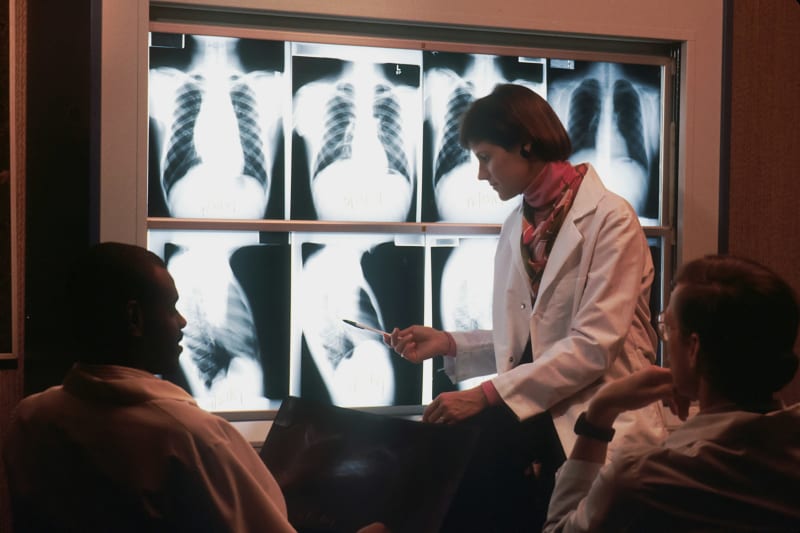
Indian Radiographer's Guide to Australia: Complete 2026 MRPBA Pathway
The complete 2026 guide for Indian BSc Medical Radiology and Imaging Technology graduates seeking radiographer registration in Australia. ASMIRT skills assessment, National MRP Exam, fees in ₹ and AUD, ASMIRT IELTS-7 requirement, visa subclasses, realistic timeline, and common mistakes to avoid. Covers Diagnostic Radiographer and Radiation Therapist divisions only — Nuclear Medicine Technologists follow a separate ANZSNM pathway.
16 min read