Indian Radiographer's Guide to Australia: Complete 2026 MRPBA Pathway
The complete 2026 guide for Indian BSc Medical Radiology and Imaging Technology graduates seeking radiographer registration in Australia. ASMIRT skills assessment, National MRP Exam, fees in ₹ and AUD, ASMIRT IELTS-7 requirement, visa subclasses, realistic timeline, and common mistakes to avoid. Covers Diagnostic Radiographer and Radiation Therapist divisions only — Nuclear Medicine Technologists follow a separate ANZSNM pathway.
The GdayRadiographer Team
14 April 2026
16 min read
Ready to start your Indian radiographer pathway?
See the step-by-step registration overview, costs, and free practice questions.
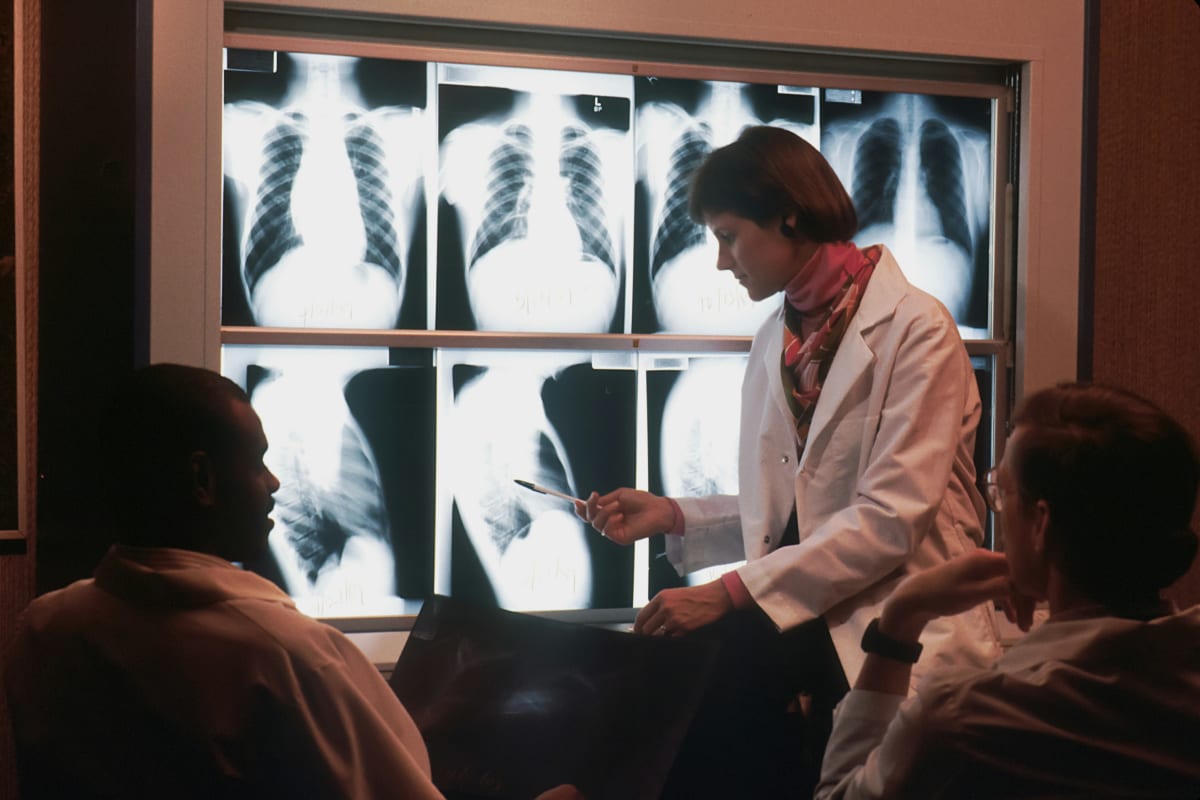
The Indian Radiographer's Complete Guide to Practising in Australia (2026)
Quick answer: Indian BSc Medical Radiology and Imaging Technology (BMRIT) graduates cannot register directly as radiographers in Australia. Degrees from Indian institutions are not auto-recognised by AHPRA, so Indian radiographers must complete a multi-step pathway: ASMIRT skills assessment (~AUD $1,041 offshore), AHPRA/MRPBA application, and the National MRP Exam — plus meet ASMIRT's strict IELTS 7-across-all-bands English requirement and visa requirements. Total realistic budget: AUD $14,000–22,000 (~₹9–14 lakh), and the typical timeline is 12–18 months from decision to first Australian paycheck.
This guide is for Diagnostic Radiographers and Radiation Therapists trained in India who want to register in Australia. Note: if you trained as a Nuclear Medicine Technologist or a Sonographer, your pathway is different — see the disclaimer in the next section.
Can Indian BSc Medical Imaging graduates work as radiographers in Australia?
Yes — but not directly. India produces thousands of well-trained radiographers each year through programs like B.Sc. Medical Radiology and Imaging Technology (BMRIT/BMIT) and B.Sc. Radiotherapy Technology, typically a 3- or 4-year program depending on the institution. Top programs are offered by:
- AIIMS (New Delhi, Rishikesh, Bhopal, Bhubaneswar, Jodhpur, Patna, Raipur, Nagpur, Mangalagiri, Bibinagar, Kalyani, Deoghar)
- PGIMER Chandigarh
- JIPMER Puducherry
- CMC Vellore and CMC Ludhiana
- KGMU Lucknow
- Manipal Academy of Higher Education
- Bangalore Medical College, BHU, NIMHANS, and many state medical universities
However, the Australian regulator (the Medical Radiation Practice Board of Australia (MRPBA) under AHPRA) does not auto-recognise Indian medical radiation qualifications for direct registration. Only New Zealand is currently on ASMIRT's pre-approved list.
Why? India's radiography regulatory framework is fragmented. There is no statutory national council for radiographers in India — radiation safety is regulated by the Atomic Energy Regulatory Board (AERB) under the Atomic Energy (Radiation Protection) Rules, 2004. Professional representation comes from non-statutory bodies like the Indian Association of Radiological Technologists (IART) and the Society of Indian Radiographers and Radiological Technologists (SIRRT), and the broader National Commission for Allied and Healthcare Professions Act, 2021 is still being implemented. Until India has a unified statutory radiographer council and mutual recognition is negotiated, Indian-trained radiographers must complete ASMIRT's individual assessment and AHPRA's registration pathway before they can practise in Australia.
The good news? Radiographers are flagged as a national shortage occupation in Australia. The Medical Radiation Practice Board of Australia (MRPBA) registers three professional divisions:
| Division | ANZSCO | Skills assessment authority |
|---|---|---|
| Diagnostic Radiographer | 251211 | ASMIRT ← this guide |
| Radiation Therapist | 251212 | ASMIRT ← this guide |
| Nuclear Medicine Technologist | 251213 | ANZSNM (different pathway) |
Important — different pathway for Nuclear Medicine Technologists. If your nominated occupation is Nuclear Medicine Technologist (ANZSCO 251213), your skills assessment is done by the Australian and New Zealand Society of Nuclear Medicine (ANZSNM) — NOT ASMIRT. ANZSNM is the Migration Regulations 1994 specified assessing authority for NMT, and the order is reversed: you must obtain MRPBA registration first, then apply to ANZSNM for migration skills assessment. See ANZSNM directly for that pathway.
Sonographers (ANZSCO 251214) are also assessed by ASMIRT for migration purposes but use a different "Certificate of Recognition in Ultrasound" outcome, and are clinically self-regulated through the Australasian Sonographer Accreditation Registry (ASAR) rather than MRPBA. If you trained as a sonographer, your pathway is also separate from this guide.
This guide focuses on the Diagnostic Radiographer and Radiation Therapist pathway via ASMIRT and MRPBA — the route that applies to the vast majority of Indian BSc MRIT and BSc Radiotherapy Technology graduates.
What is the MRPBA pathway and why do Indian radiographers need to do it?
The Medical Radiation Practice Board of Australia (MRPBA) is the AHPRA-affiliated board that registers all medical radiation practitioners in Australia. To register, internationally qualified Diagnostic Radiographers and Radiation Therapists must:
- Get a positive ASMIRT Skills Assessment — the Australian Society of Medical Imaging and Radiation Therapy (ASMIRT) is the assessment authority that evaluates whether your overseas qualifications and experience meet Australian standards
- Apply to MRPBA via AHPRA for registration
- Sit and pass the National MRP Exam (almost always required for non-New Zealand candidates) — administered four times a year
- Receive AHPRA general registration — at which point you can practise anywhere in Australia
A new streamlined IQHP (Internationally Qualified Health Practitioner) pathway is expected to launch mid-2026 for candidates who are already registered and currently practising in a comparable overseas setting. This may simplify the process for established Indian radiographers, but the full traditional pathway above remains the default route as of April 2026.
ASMIRT and MRPBA fees for Indian radiographers in 2026 (₹ and AUD)
All fees below are from the official ASMIRT Schedule (asmirt.org/overseas-assessments) and the MRPBA fees page, converted at 1 AUD ≈ ₹65.5 (April 2026). Verify the exchange rate on the day you transfer funds.
| Stage | AUD | Approximate INR |
|---|---|---|
| ASMIRT Skills Assessment (offshore applicants) | $1,041 | ~₹68,200 |
| ASMIRT Skills Assessment (onshore, incl. GST) | $1,143 | ~₹74,900 |
| Dual-modality assessment (extra) | +$500 | +~₹32,750 |
| AHPRA application fee | ~$300 | ~₹19,650 |
| National MRP Exam | ~$800–1,200 | ~₹52,400–78,600 |
| MRPBA annual registration (2025/26) | $221 | ~₹14,500 |
| Subtotal (regulator fees) | ~$2,362–2,762 | ~₹1.55–1.81 lakh |
Additional costs to budget for:
- English language test: IELTS Academic (~AUD $495 / ₹32,400), OET (~AUD $587 / ₹38,500), PTE Academic (~AUD $445 / ₹29,150), or TOEFL-iBT (~AUD $370 / ₹24,250)
- Document verification and notarisation in India: ~₹3,000–8,000 (Ministry of Education attestation + MEA Apostille — India joined the Hague Apostille Convention on 14 July 2005, so an MEA Apostille is sufficient and no additional Australian High Commission legalisation is required)
- Visa application (subclass 189 or 190): ~AUD $4,640 / ~₹3,04,000 in 2026 — verify at Home Affairs
- Travel and accommodation if you sit the National MRP Exam in Australia (most candidates sit it in approved exam centres, predominantly in capital cities): AUD $2,000–4,000 / ₹1.3–2.6 lakh (single trip)
- Exam preparation resources: AUD $300–1,500 depending on provider
- Living expenses during preparation and examination periods
Realistic total budget: ₹9,00,000 to ₹14,00,000 (AUD $14,000–22,000) from start to first Australian paycheck.
Australian radiographer salaries in 2025–2026:
- Entry-level (1–3 years): AUD $67,590–70,408 (~₹44–46 lakh/year)
- Mid-career (4–9 years): AUD $91,000–95,000 (~₹60–62 lakh/year)
- Senior (10+ years): AUD $115,000–121,000 (~₹75–79 lakh/year)
- Average across the workforce: AUD $95,000–110,000 (~₹62–72 lakh/year)
This compares to typical Indian radiographer salaries of ₹1.2–8.4 lakh per year (₹10,000–20,000/month for fresh graduates, rising to ₹40,000–70,000+/month for 5+ years' experience in metro private hospitals or imaging chains). The salary uplift is roughly 15–40× — one of the largest of any profession in any source country, and most Indian radiographers recover their full migration investment within 6–9 months of starting work in Australia.
The pathway explained step by step
Step 1 — Document gathering and ASMIRT Skills Assessment (~AUD $1,041 / ₹68,200)
You submit a comprehensive application to ASMIRT including:
- BSc degree certificate and all year-by-year transcripts
- Detailed curriculum/syllabus from your institution
- Clinical placement records showing modalities and hours
- Professional references from current/previous employers (letters must state date range, hours per week, full range of modalities performed, and time spent in each modality)
- AERB-related certifications (if held — Radiation Safety Officer training, etc.)
- Proof of at least 1 year (12 months FTE) of post-qualification clinical experience within the last 5 years (mandatory, per the ASMIRT OQAP application form, July 2025 — graduates with less than 12 months post-qualification practice cannot yet apply)
- Identity documents
- English test results
ASMIRT compares your qualifications against the Australian "Statement of Qualification" standard at the time of your graduation. If your education and experience are equivalent, you receive a positive Skills Assessment letter — required both for AHPRA registration and for skilled migration visa applications.
Processing time: typically 8–16 weeks for non-pre-approved (i.e. Indian) qualifications. Pre-approved New Zealand applications are processed within ~1 month.
Important: a positive ASMIRT skills assessment does not guarantee AHPRA registration. You still need to pass the National MRP Exam.
Step 2 — AHPRA application via MRPBA (~AUD $300 / ₹19,650)
Once ASMIRT issues your Skills Assessment, you apply to MRPBA via AHPRA for registration. MRPBA reviews your application and confirms whether you need to sit the National MRP Exam (almost always yes for Indian candidates) and which division you are eligible for: Diagnostic Radiographer or Radiation Therapist. You can apply for both divisions if your training and experience cover them.
Step 3 — National MRP Exam (~AUD $800–1,200 / ₹52,400–78,600)
The National MRP Exam is an online computer-based exam delivered at approved exam centres in Australia (predominantly capital cities — Sydney, Melbourne, Brisbane, Perth, Adelaide). It has two parts:
- Part A — Common Capabilities: tests the foundations of medical radiation practice that every practitioner must know (radiation safety, professional practice, communication, ethics, infection control, Australian healthcare context, cultural safety)
- Part B — Division-Specific Capabilities: tests the technical and clinical knowledge for your chosen division (diagnostic radiography or radiation therapy)
You need a minimum of 65% in BOTH Part A and Part B to pass. The exam is held four times a year in 2026:
| Sitting | Exam dates | Registration window |
|---|---|---|
| Sitting 1 | 17–25 January 2026 | 29 December 2025 – 9 January 2026 |
| Sitting 2 | 11–19 April 2026 | 16–27 March 2026 |
| Sitting 3 | 11–19 July 2026 | 22 June – 3 July 2026 |
| Sitting 4 | 17–25 October 2026 | 21 September – 2 October 2026 |
You are permitted a maximum of three attempts at the National MRP Exam. After three failed attempts you will not be allowed to register or sit again — meaning preparation matters.
Step 4 — AHPRA registration (~AUD $221 annual)
Once you pass the National MRP Exam, you complete your AHPRA registration. The annual registration fee is AUD $221 for 2025/26, set by MRPBA and updated each September. Once registered, you can practise anywhere in Australia.
English language requirements for Indian radiographers
This is the critical constraint for Indian candidates because radiographers face two layered English requirements:
Layer 1 — ASMIRT Skills Assessment (the binding constraint)
ASMIRT requires higher scores than AHPRA's general standard — and there is no writing reduction at this stage:
| Test | Listening | Reading | Writing | Speaking | Overall |
|---|---|---|---|---|---|
| IELTS Academic | 7.0 | 7.0 | 7.0 | 7.0 | – |
| OET | B | B | B | B | – |
| PTE Academic | 66 | 66 | 66 | 66 | 66 |
| TOEFL iBT | 24 | 24 | 27 | 23 | 94 total |
| Cambridge English Advanced (CAE) | accepted; specific minimum score not published by ASMIRT — verify against ASMIRT's English Language Skills Policy before sitting | – | – | – | – |
All scores must be achieved in a single test sitting, taken at a test venue — ASMIRT does not accept at-home or online versions — and within the last two years.
Layer 2 — AHPRA registration (the scores changed on 23 April 2026)
This no longer works the way it used to. Clearing ASMIRT used to mean you had automatically cleared AHPRA as well. On 23 April 2026 the National Boards updated the minimum scores for every accepted test except IELTS, and that assumption now holds for IELTS only.
AHPRA's requirement for tests sat on or after 23 April 2026:
| Test | Overall | Listening | Reading | Writing | Speaking |
|---|---|---|---|---|---|
| IELTS Academic | 7.0 | 7.0 | 7.0 | 6.5 | 7.0 |
| OET | — | 350 | 360 | 350 | 360 |
| PTE Academic | 63 | 58 | 59 | 60 | 76 |
| TOEFL iBT | 91 | 22 | 22 | 23 | 24 |
Set that against ASMIRT's table above and the gaps appear:
- IELTS — ASMIRT's 7.0 in all four bands still clears AHPRA comfortably. This is the one test where passing ASMIRT still means passing AHPRA.
- OET — ASMIRT accepts grade B, and B starts at 350. AHPRA now wants 360 in reading and speaking. Score 350–359 in either and you clear ASMIRT but fail AHPRA.
- PTE — ASMIRT wants 66 in every element. AHPRA now wants 76 in speaking. Clearing ASMIRT does not get you there.
- TOEFL — ASMIRT accepts speaking 23. AHPRA now requires 24.
If you sat your test on or before 22 April 2026, the previous AHPRA scores still apply to it: IELTS 7 / 7 / 6.5 / 7, OET B / B / C+ / B, PTE 66, TOEFL 94 total. Which table applies depends on when you sat the test, not when you apply.
One more mismatch worth planning around: AHPRA lets you combine two sittings within a 12-month period, and allows an IELTS One Skill Retake within 60 days. ASMIRT requires a single sitting. A two-sitting combination that satisfies AHPRA will not satisfy ASMIRT. Neither body accepts at-home or remotely proctored tests.
Sources: Ahpra, "Accepted English language tests" (Table 2, in force from 23 April 2026); ASMIRT overseas assessments English language requirements. Both checked 27 August 2026.
Practical implication: prepare for IELTS 7 across all four bands. This is harder than the physiotherapy or nursing pathways and is the single most common reason Indian radiographer candidates stall. Plan 6–12 weeks of intensive English preparation, particularly on the Writing module, before sitting the test.
For Indian BSc MRIT graduates: India is not on AHPRA's "recognised countries" list for automatic English exemption (that list is restricted to Australia, Canada, New Zealand, Republic of Ireland, the United Kingdom and the United States — South Africa was removed effective 18 March 2026). However, because Indian BSc MRIT programs are delivered in English, you may be able to apply for an education-based exemption for AHPRA's component — but not for ASMIRT's. Most Indian candidates will sit IELTS or OET.
Recommendation: most Indian candidates choose IELTS Academic because it is the most widely available test in India, with British Council centres in Delhi, Mumbai, Bangalore, Chennai, Hyderabad, Kolkata, Pune and many smaller cities. OET is well-suited because the scenarios mirror healthcare communication, but availability is more limited.
Visa pathways from India to Australia for radiographers
Diagnostic Radiographers (ANZSCO 251211) and Radiation Therapists (ANZSCO 251212) — Skill Level 1 — appear on Australia's key skilled occupation lists: the Medium and Long-term Strategic Skills List (MLTSSL) (governing points-tested skilled visas) and the Core Skills Occupation List (CSOL) (governing employer-sponsored visas, introduced December 2024). Radiographers are also flagged as a national shortage occupation by Jobs and Skills Australia. This makes Indian radiographers eligible for multiple subclasses:
- Subclass 189 — Skilled Independent: Permanent residency, no sponsor needed. 65 points is the minimum EOI lodgement threshold, but in 2026 the government uses a 4-tier invitation priority system — healthcare occupations (including radiographers) sit in Tier 1, the highest priority level, meaning invitations are typically issued from 75–80 points onwards, well below the 85–95+ points most non-priority occupations require.
- Subclass 190 — State Nominated: Permanent residency with state sponsorship. Most Australian states sponsor radiographers due to regional shortages. Adds 5 points to your EOI.
- Subclass 491 — Skilled Work Regional: 5-year provisional visa leading to PR (subclass 191). Lower points threshold but requires regional living.
- Subclass 482 — Skills in Demand (SID): Employer-sponsored temporary visa (2–4 years). Replaced the old TSS visa on 7 December 2024. Many regional Australian hospitals actively sponsor overseas radiographers via the Core Skills stream.
- Subclass 186 — Employer Nominated Scheme: Permanent, employer-sponsored via the Direct Entry stream (uses CSOL).
Important: your ASMIRT Skills Assessment is what the Department of Home Affairs uses for visa skills assessment purposes. The typical order is: ASMIRT skills assessment → AHPRA application → National MRP Exam → AHPRA registration → visa application → arrival and start working.
For the most current visa information, always check the Department of Home Affairs website.
Realistic timeline from BSc India to registered Australian radiographer
| Month | Milestone |
|---|---|
| 0 | Decision to pursue Australian registration; begin English prep |
| 1–4 | English test preparation; sit IELTS Academic targeting 7 across all bands |
| 4–5 | Gather documents (BSc certificate, transcripts, syllabus, clinical placement records, AERB certs, employer references, Ministry of Education attestation + MEA Apostille) |
| 5–6 | Submit ASMIRT Skills Assessment application |
| 6–9 | ASMIRT review and issue of Statement of Qualification (8–16 weeks for individual assessment) |
| 9–10 | AHPRA application via MRPBA |
| 10–14 | National MRP Exam preparation (300–500 study hours) |
| 14 | Sit National MRP Exam (next available sitting — Jan, Apr, Jul or Oct) |
| 14–15 | Exam results released |
| 15–16 | Complete AHPRA general registration |
| 16–18 | Visa application, police clearance, medicals |
| 18–20 | Arrive in Australia, begin working |
Typical fast-track total: 16–20 months from decision to first Australian paycheck. Candidates with strong English (IELTS-7 ready), 2+ years of solid clinical experience, and well-organised documents can compress this to 12–15 months. Failing the National MRP Exam adds 3–6 months per re-sit.
Common mistakes Indian radiographer candidates make — and how to avoid them
- Underestimating the IELTS 7 across all bands requirement. This is the #1 reason Indian radiographer candidates stall. The writing band is hardest. Treat English as a 3–6 month investment, not a 6-week one. Sit IELTS before doing anything else — your timeline cannot move faster than your English score.
- Not having the minimum 12 months FTE of post-qualification clinical experience. Fresh graduates cannot apply to ASMIRT until they have at least 1 year (12 months FTE) of clinical experience within the past 5 years. If you graduated less than 12 months ago, build experience first in a hospital or imaging centre in India before starting the pathway.
- Underestimating Australian practice context. The National MRP Exam Part A tests Australian-specific content — Aboriginal and Torres Strait Islander cultural safety, Australian radiation safety legislation, MRPBA Professional Capabilities (revised 2025), Medicare billing fundamentals, evidence-based practice culture. Indian curricula are clinically strong but lighter on these contextual elements.
- Confusing ASMIRT with AHPRA. They are two separate organisations with two separate processes. ASMIRT does the skills assessment; AHPRA/MRPBA does the registration. Your application must succeed at both.
- Confusing pathways for different divisions. If you're a Nuclear Medicine Technologist, the ASMIRT pathway in this guide does not apply to you — you need to apply to ANZSNM for skills assessment after MRPBA registration. Sonographers also use a separate pathway. Make sure you know which pathway you're on before paying any fees.
- Applying to ASMIRT with incomplete clinical placement documentation. Indian transcripts often don't include detailed modality breakdowns or hours. Request a detailed clinical placement letter from your institution and your employer showing exactly what equipment you operated, which procedures you performed, and how many.
- Delaying MEA Apostille and Ministry of Education attestation. Indian academic document authentication takes weeks — start it the moment you decide to pursue the pathway. India joined the Hague Apostille Convention on 14 July 2005, so the MEA Apostille is the final step — no Australian High Commission legalisation is needed afterwards.
- Trying to self-study the National MRP Exam without structured preparation. The exam is broad and division-specific — most candidates who pass on the first attempt use structured preparation programs and mock exams.
Your next step
If you are serious about practising as a radiographer in Australia, the single highest-leverage move you can make today is to start IELTS preparation. Indian BSc MRIT clinical foundations are strong — your English score is what will determine how fast you can move through the ASMIRT pathway.
Start your National MRP Exam preparation with GdayRadiographer — built specifically for internationally qualified radiographers by a team that understands the Indian curriculum and the Australian examination standard.
You may also want to read:
- MRPBA Registration Pathway 2026: Step-by-Step for Overseas Radiographers
- National MRP Exam 2026: Complete Preparation Guide
- MRP Exam 12-Week Study Plan
- MRP Exam Day Walkthrough
- 5 MRP Exam Mistakes to Avoid
- Hardest MRP Exam Topics
- OET vs IELTS for Radiographers Compared
- MRP Exam Fees 2026 Breakdown
- Streamlined IQHP Pathway 2026
This guide is based on official ASMIRT, MRPBA and AHPRA documentation, the ASMIRT Overseas Assessments policy (July 2025 OQAP application form), MRPBA fees and registration standards, the AHPRA English Language Skills Registration Standard (revised 18 March 2025), the MRPBA Professional Capabilities (revised 2025), Atomic Energy (Radiation Protection) Rules 2004, and the Australian Department of Home Affairs Skilled Occupation List. Fees and requirements change — always verify current information with ASMIRT, MRPBA, AHPRA, and Home Affairs before making financial or migration decisions. GdayRadiographer is not affiliated with ASMIRT, MRPBA, AHPRA, AERB or IART.
Frequently Asked Questions
Is a BSc Medical Imaging Technology from India enough to register as a radiographer in Australia?
No. Indian BSc MIT/MRIT degrees are not auto-recognised by AHPRA or MRPBA. Indian radiographers must complete a multi-step pathway: ASMIRT skills assessment, AHPRA application via MRPBA, National MRP Exam, and final AHPRA registration. New Zealand is currently the only country with pre-approved qualifications.
How much does the radiographer pathway cost for Indian candidates in 2026?
Regulator fees total approximately AUD $2,362–2,762 (~₹1.55–1.81 lakh): ASMIRT skills assessment $1,041 offshore (or $1,143 onshore including GST), AHPRA application ~$300, National MRP Exam $800–1,200, MRPBA annual registration $221. Including English test, MEA/HRD document attestation, visa, travel and exam preparation, a realistic all-in budget is ₹9–14 lakh.
Which Indian institutions are recognised by ASMIRT?
None of the Indian institutions are on ASMIRT's pre-approved list — only New Zealand qualifications are. However, BSc Medical Imaging Technology and BSc Radiology graduates from recognised Indian institutions like AIIMS (all branches), PGIMER Chandigarh, JIPMER Puducherry, CMC Vellore, KGMU Lucknow, Manipal Academy of Higher Education, BHU and similar reputable programs are eligible to apply for individual ASMIRT skills assessment. Each application is reviewed on its own merits.
Do Indian radiographers need to sit an English test? What score do I need?
Yes. Indian radiographers must sit IELTS Academic, OET, PTE Academic, TOEFL iBT, or Cambridge English Advanced, and ASMIRT requires a higher score than AHPRA's general standard. ASMIRT requires IELTS Academic 7.0 in every band (Listening, Reading, Writing, Speaking) — no writing reduction. Equivalent ASMIRT scores: OET B in each component; PTE Academic overall 66 with no element below 65; TOEFL iBT total 94 with L24, R24, W27, S23. AHPRA's general standard (post-18 March 2025) accepts 7/7/6.5/7, but you must meet ASMIRT's stricter standard first because ASMIRT issues your skills assessment. The writing band is the hardest for most Indian candidates — plan 6–12 weeks of focused preparation.
I trained as a Nuclear Medicine Technologist in India — can I use this guide?
No, your pathway is different. Nuclear Medicine Technologists (ANZSCO 251213) are skills-assessed by the Australian and New Zealand Society of Nuclear Medicine (ANZSNM), NOT ASMIRT. ANZSNM is the Migration Regulations 1994 specified assessing authority for NMT. The order is also reversed: NMTs must obtain MRPBA registration first, then apply to ANZSNM for migration skills assessment. Sonographers (ANZSCO 251214) also follow a different pathway through ASMIRT (with a separate Certificate of Recognition in Ultrasound) and are clinically self-regulated through ASAR.
How long does the pathway take for Indian radiographers?
Most Indian candidates complete the pathway in 16–20 months from decision to Australian registration, including English test preparation, ASMIRT processing (8–16 weeks), AHPRA application, National MRP Exam preparation and sitting (held 4×/year), and visa processing. Fast-track candidates with strong English and well-organised documents can compress this to 12–15 months. Failing the National MRP Exam adds 3–6 months per re-sit; you are limited to 3 attempts.
What is the National MRP Exam and how do I pass it?
The National Medical Radiation Practice Exam is an online computer-based exam administered four times a year (January, April, July, October 2026). It has two parts: Part A tests common capabilities required of all practitioners (radiation safety, professional practice, ethics, communication, Australian healthcare context, cultural safety) and Part B tests division-specific knowledge for your chosen division (diagnostic radiography or radiation therapy). You need a minimum of 65% in BOTH parts to pass. Maximum of 3 attempts allowed.
What visa can an Indian radiographer apply for and what is the salary in Australia?
Diagnostic Radiographers (ANZSCO 251211) and Radiation Therapists (ANZSCO 251212) are listed on both the MLTSSL and the Core Skills Occupation List (CSOL), and flagged as national shortage occupations. Eligible visas include subclass 189 (Skilled Independent, permanent), 190 (State Nominated, permanent), 491 (Regional Provisional), 482 (Skills in Demand, employer-sponsored temporary), and 186 (Employer Nominated, permanent). Healthcare occupations are in Tier 1 of the new invitation priority system and typically receive 189 invitations from 75–80 points. Australian diagnostic radiographers earn AUD $67,590–70,408 per year at entry level (~₹44–46 lakh), AUD $91,000–95,000 mid-career (~₹60–62 lakh), and AUD $115,000–121,000+ at senior level (~₹75–79 lakh). The salary uplift versus typical Indian radiographer salaries (₹1.2–8.4 lakh/year) is roughly 15–40×.
Related Articles
Filipino Radiographer's Guide to Australia: Complete 2026 MRPBA Pathway
The complete 2026 guide for Filipino BSRT graduates seeking radiographer registration in Australia. ASMIRT skills assessment, National MRP Exam, fees in ₱ and AUD, ASMIRT IELTS-7 requirement, visa subclasses, realistic timeline, and common mistakes to avoid. Covers Diagnostic Radiographer and Radiation Therapist divisions only — Nuclear Medicine Technologists follow a separate ANZSNM pathway.
16 min read
UK Radiographer's Guide to Australia: Complete 2026 MRPBA Pathway
The complete 2026 guide for UK HCPC-registered radiographers moving to Australia — the easiest pathway of any international source country. English exemption (UK is on AHPRA recognised countries list), ASMIRT skills assessment, National MRP Exam, fees in £ and AUD, NHS England 2026/27 pay band comparison, visa subclasses, realistic timeline. Covers Diagnostic Radiographer and Radiation Therapist divisions only — Nuclear Medicine Technologists follow a separate ANZSNM pathway.
17 min read